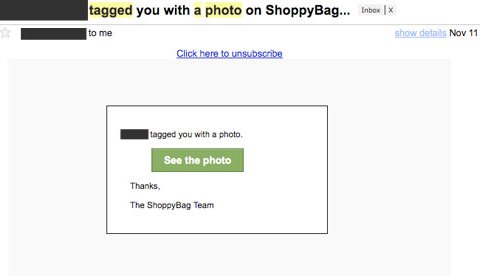
Friendly Fire

Scams aren’t always totally obvious. Cybercrooks have been using more “signed” malware, malicious files that imitate files or sites your trust and the even more prevelant “friendly fire,” messages from friends containing viruses disguised as invitations to social sites.
A recent example is the ShoppyBag scam, an e-mail notification alerting you that a photo of you has been tagged online, prompting users for account information that immediately leeches onto your e-mail account and sends out invitations to your entire contact list.
Botnets

Botnets, software agents that autonomously and automatically once opened, sending out a difficult-to-stop forward transmissions process of Trojans and viruses. Though historically, botnets have shown very little resilience, McAfee predicts a stronger “zombie army” in 2011. Instead of being attacked to a single ISP, botnets are now piggybacking themselves onto applications utilizing the channels of social sites like Twitter or LinkedIn, which means it’s become all the more difficult to put a stop to them. “You can take down an IRC Channel, or you can take down a malicious web site, but the ability to take down Twitter or LinkedIn, that just won’t happen,” Marucs says. “They’re using the channel of Twitter, not the site itself, the application behind it to send commands to their bots.” This will also allow the bots to sneak through firewalls as you’ve already given these social sites to run on your computer.


