Policy & Law

Grading How Well Companies Are Cooperating with ‘Do Not Track’

David Paul Morris / Getty Images

Remember “Do Not Track,” the initiative in the White House’s Consumer Privacy Bill of Rights that called for an opt-out button for users who don’t want to be tracked by different sites? Well, it’s still alive and it has an influential new supporter.

Police Need a Standard Policy to Deal with Flood of Smartphone GPS Data

Richard Newstead / Getty Images

With nearly 75% of smartphone owners accessing location-based information, there doesn’t seem to be a standard procedure when it comes to police departments asking service providers for your information.

The Breakdown: Who Supports CISPA and Who Doesn’t

T.J. Kirkpatrick, AFP, Alex Wong / Getty Images

Last week, Congress backed the Cyber Intelligence Sharing and Protection Act (CISPA) by a vote of 248-168. Before it moves on to the Senate, we take a look at the key players behind and opposed to CISPA.

A Little Girl Finds Her Voice Thanks to Threatened New iPad App

Keith Wagstaff

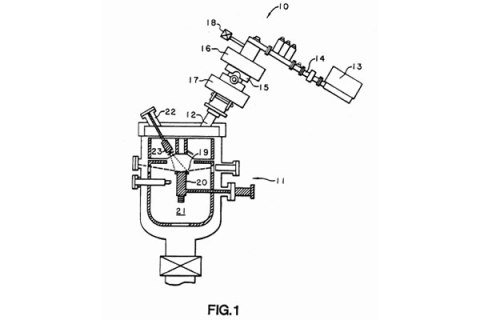
A new iPad app helps Maya deal with her speech problem. Unfortunately for her, it might not be around for much longer thanks to a patent infringement lawsuit.

The Case Against Letting the U.N. Govern the Internet

Reuters

All this year, and culminating in December at the World Conference on International Telecommunications in Dubai, the nations of the world will be negotiating a treaty to govern international telecommunications services between countries. It is widely believed that some countries, including Russia and China, will take the opportunity to push for U.N. control of Internet governance. Such a turn of events would certainly be troubling.

FBI Hacked While Congress Ponders Cybersecurity Legislation

Reuters

At a rare open hearing of the Senate Select Committee on Intelligence last week, FBI Director Robert Mueller testified that threats from cyber-espionage and cyber-attacks will surpass terrorism as the number one threat facing the United States. Not three days later, hackers released a recording of an intercepted call between FBI agents and their U.K. counterparts investigating the Anonymous and LulzSec collectives.

What Europe’s ‘Right to Be Forgotten’ Has in Common with SOPA

Reuters

In George Orwell’s 1984, the Ministry of Truth employs a “memory hole” to eliminate inconvenient facts. If a previously published photo or record later proves to be embarrassing for the government, it is thrown down the hole. The facts are erased from the face of the earth and the world is led to believe that something that happened never actually happened. The European Commission last week sought to give citizens their own personal memory holes.

Why We Won’t See Many Protests like the SOPA Blackout

Google

The SOPA blackout protest last week was an unprecedented event. Its massive success surprised even the activists who spurred the protest. So does this mean that we are entering the much-heralded era of Internet-powered citizen democracy? The answer is yes. And no.

Why Google’s Biggest Problem with ‘Search Plus Your World’ Isn’t Antitrust

Google

Some claim that Google Search Plus Your World, which tightly integrates results from Google+ into organic search, violates antitrust laws. Google does have a big problem on its hands, but it’s not an antitrust problem. It’s market reaction.

At the Top of Congress’ New Year Agenda? Regulate the Net

Caroline Purser / Getty Images

When Congress gaveled for the year in December, opponents of two Internet-censoring piracy bills cheered. Their efforts seemed to have blocked the legislation’s movement. But when Congress comes back later this month, it already has a first order of business: regulate the net.

First Privacy, Now Censorship: Will Twitter Continue to Stand Up for Its Users' Rights?

Illustration by Alexander Ho for TIME

In the face of legal pressure last year, Twitter fought for user privacy. This year, its new challenge will be censorship—and a repeat performance would be welcome.