Security & Privacy

Grading How Well Companies Are Cooperating with ‘Do Not Track’

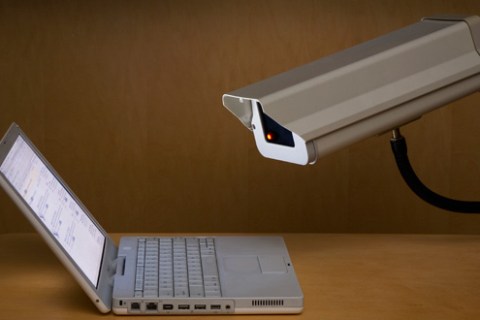
David Paul Morris / Getty Images

Remember “Do Not Track,” the initiative in the White House’s Consumer Privacy Bill of Rights that called for an opt-out button for users who don’t want to be tracked by different sites? Well, it’s still alive and it has an influential new supporter.

Police Need a Standard Policy to Deal with Flood of Smartphone GPS Data

Richard Newstead / Getty Images

With nearly 75% of smartphone owners accessing location-based information, there doesn’t seem to be a standard procedure when it comes to police departments asking service providers for your information.

You Are Not an IP Address, Rules Judge

James Yang / Getty Images

An IP address is not a Social Security number or a fingerprint. It, in the words of Judge Gary Brown, “provides only the location at which one of any number of computer devices may be deployed, much like a telephone number can be used for any number of telephones.”

8 Tools for the Online Privacy Paranoid

Getty Images / Thomas Jackson

If you want to participate in today’s Internet, and all the apps and services that go with it, you have two choices: Accept that your information is out there and try not to worry about it, or arm yourself with some privacy protection tools. Should you choose the latter path, check out these apps and services to help you stay anonymous online and keep your information out of the wrong hands.

Vibe: Private Twitter Alternative Helps ‘Occupy’ Protesters Organize Anonymously

Mario Tama / Getty Images

The lines are blurry when it comes to who exactly owns what you post on social media networks like Twitter. That’s why developers have created an alternative set of social media tools with privacy in mind, including the newly-released version of Vibe, out now for iOS and soon for Android.

The Breakdown: Who Supports CISPA and Who Doesn’t

T.J. Kirkpatrick, AFP, Alex Wong / Getty Images

Last week, Congress backed the Cyber Intelligence Sharing and Protection Act (CISPA) by a vote of 248-168. Before it moves on to the Senate, we take a look at the key players behind and opposed to CISPA.

Will Google Drive Snoop Inside Your Data? Google Needs to Be Clearer

Caroline Purser / Getty Images

Upload your private diary, novel manuscript, amateur movie or digitally crafted song to Google’s new Google Drive and it’s totally impervious to company tinkering, right? Not necessarily.

FAA Reveals List of Colleges and Police Departments That Can Fly Drones

Xavier Rossi / Getty Images

Back in February, we wrote about a new bill passed by Congress that gave private, military and commercial drones more access to U.S. airspace. Now, thanks to a Freedom of Information Act (FOIA) lawsuit from the Electronic Frontier Foundation, the FAA has released a list of institutions that have asked for permission to fly drones in the United States.

5 Reasons the CISPA Cybersecurity Bill Should Be Tossed

Caroline Purser / Getty Images

So long SOPA and PIPA, hello Cyber Intelligence Sharing and Protection Act (CISPA), a law proposed last November to give the government new powers to secure networks and thwart copyright violators. It’s finally up for a vote later this month, sparking protests this week in what’s looking like another informational ramp-up to leverage public opinion against the bill’s passage.

Why Combining Social Media Sites Can Be Hazardous to Your Privacy

Girls Around Me

It’s hard not to feel gross after reading Cult of Mac’s description of Girls Around Me. For those not up-to-date on the controversy, Girls Around Me is an app that maps out women’s locations and links to personal information about them via their Facebook profiles.

New OnStar Service Lets You Track Your Family’s Cars Online

Getty Images

OnStar’s new service lets you track every single car in your family’s garage, letting you see exactly where everyone is on the Family Link website.